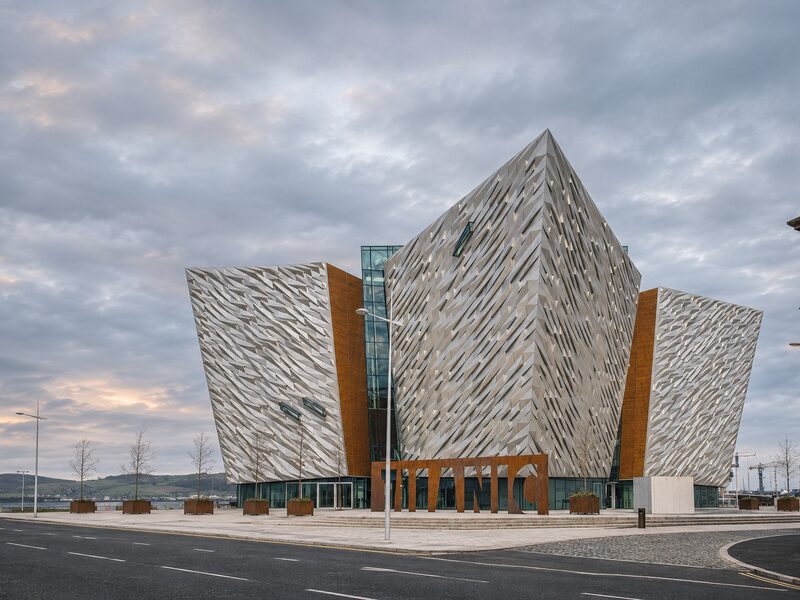
Titanic Belfast
A six-storey landmark on the Harland & Wolff slipways, telling the ship's whole story from drawing board to the ocean floor.
Titanic Quarter
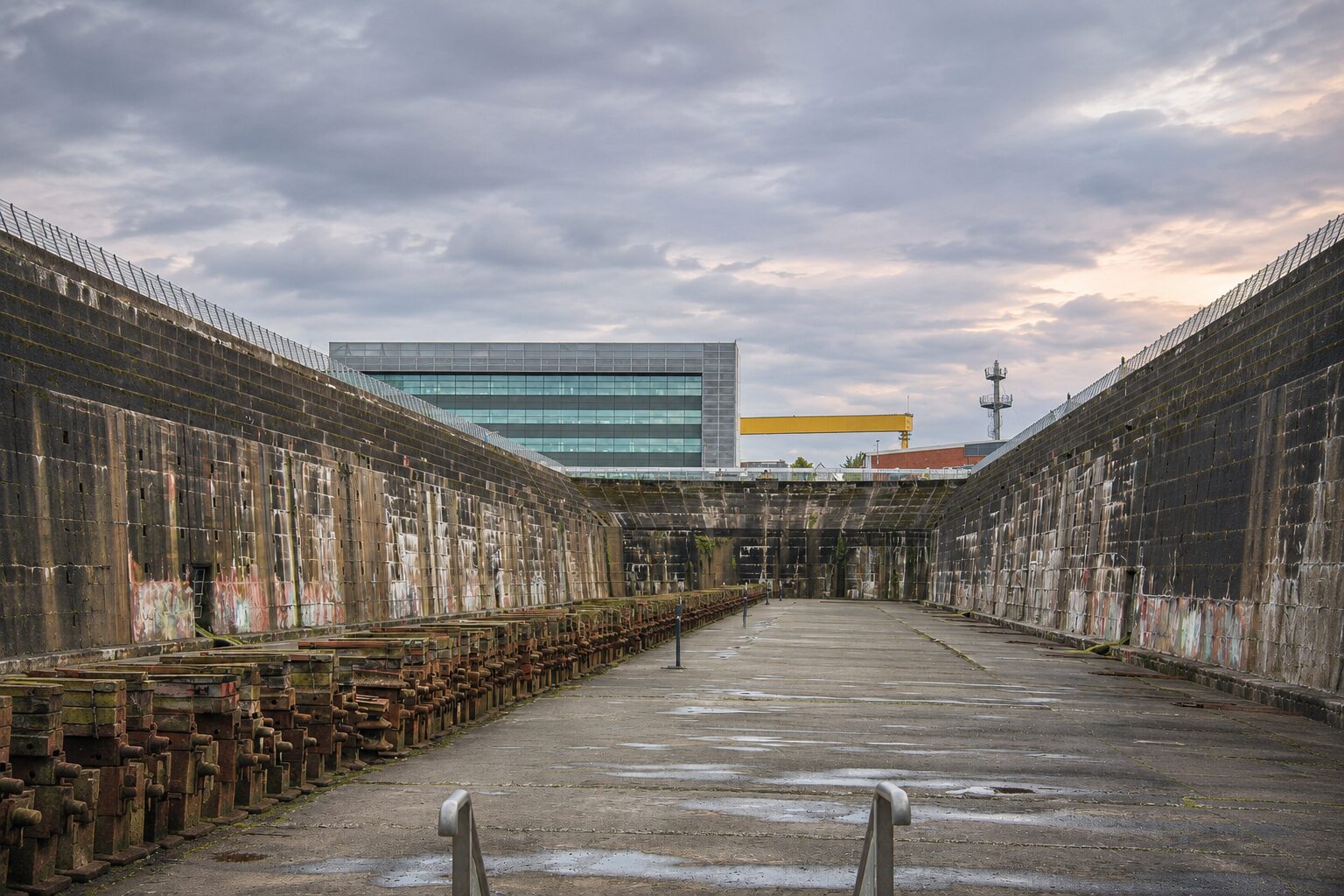
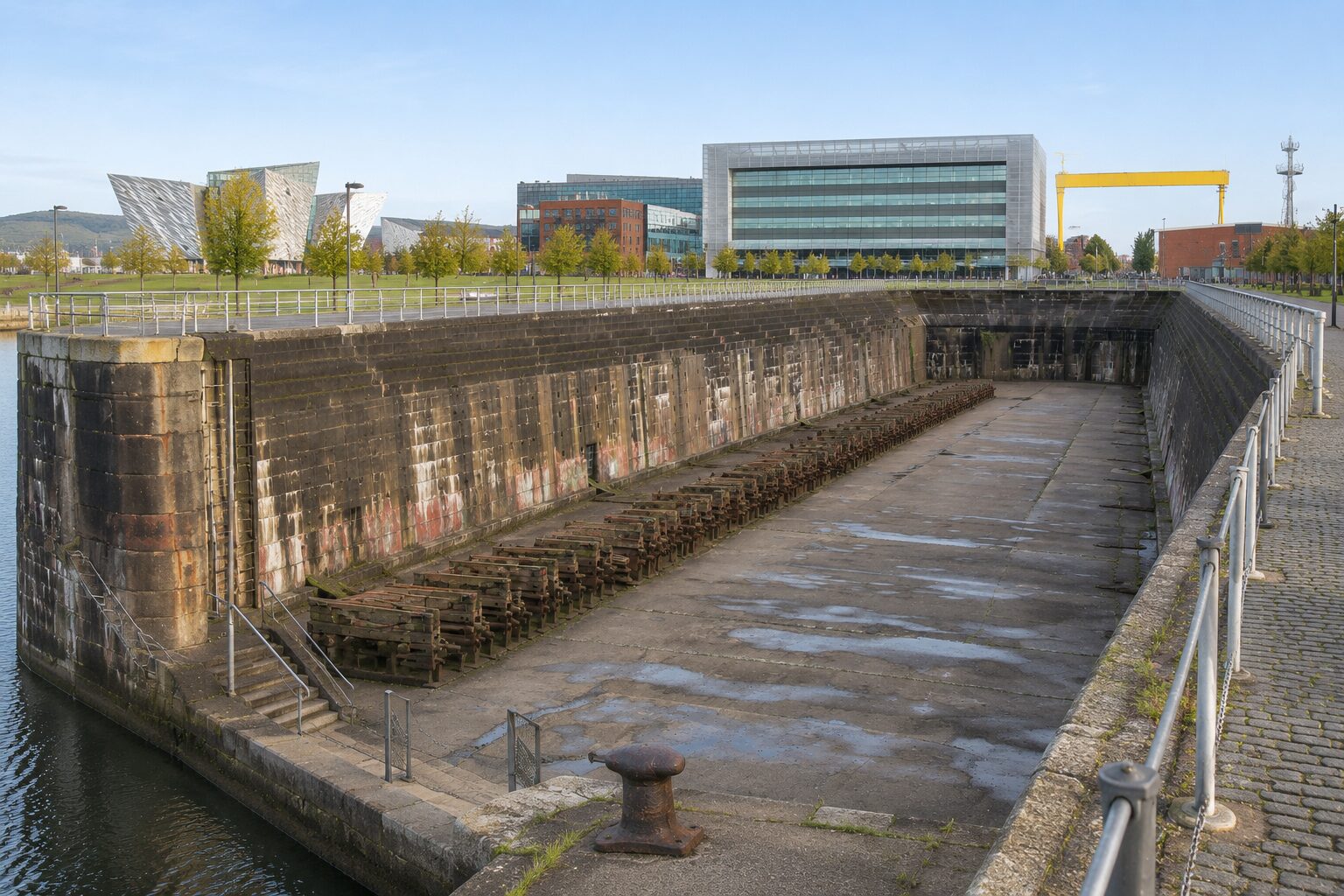
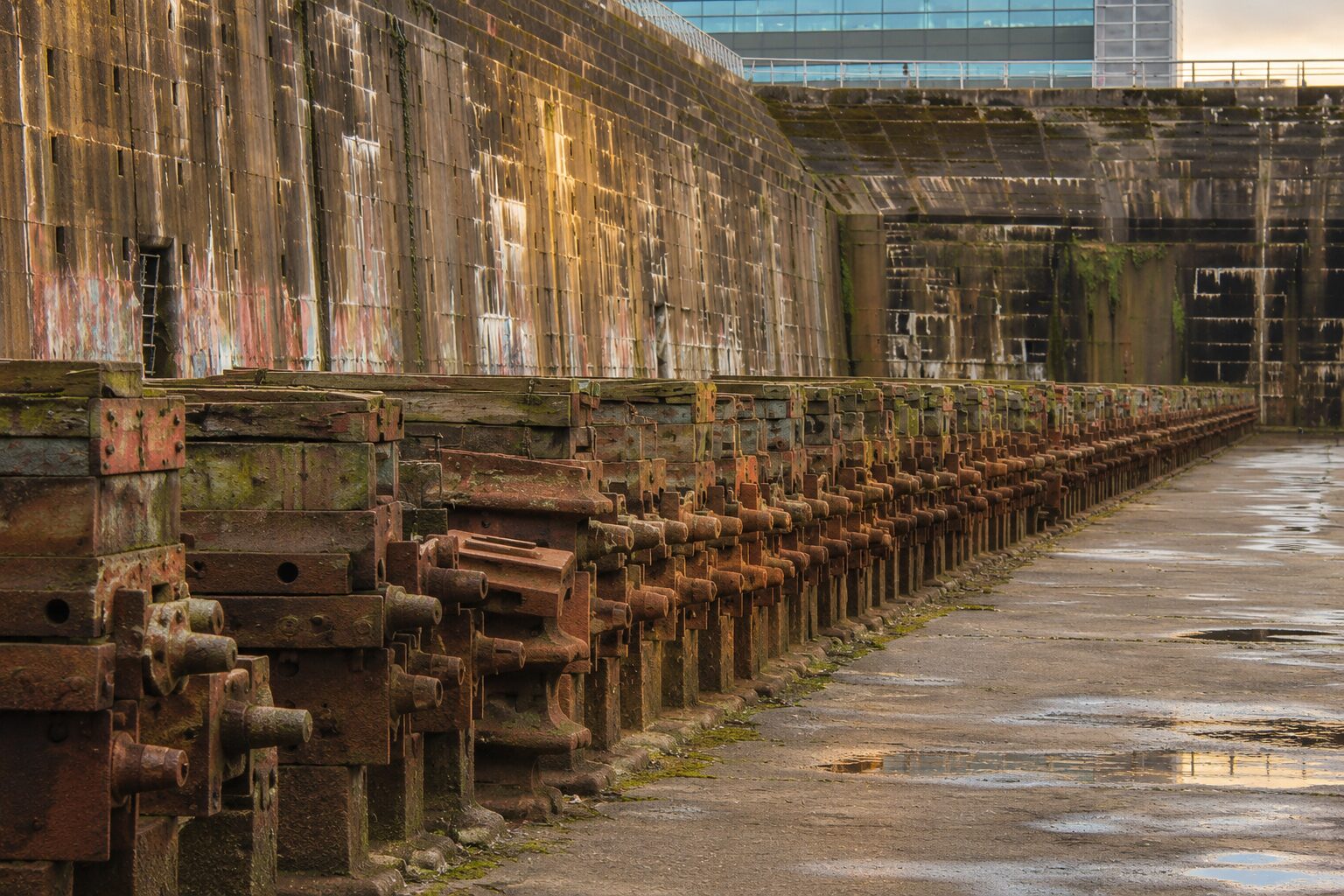
At the eastern end of the Titanic Quarter lies the Thompson Dry Dock — the enormous graving dock dug out of the Belfast mud specifically to hold Titanic and Olympic for their final fit-out. It remains one of the most moving spots in the whole quarter precisely because it is so unadorned.
When it opened in 1911 the Thompson Dock was among the largest in the world. You can walk down onto the floor of the dock, a space big enough to swallow a skyscraper laid on its side, and stand where Titanic sat for the last time on Belfast soil before sailing to Southampton.
The adjacent Pump-House still contains the pumping engines that could drain the dock of over twenty million gallons of water in under two hours. Together they are raw industrial heritage — no ride, no soundtrack, just the scale of what Edwardian Belfast could build.
A six-storey landmark on the Harland & Wolff slipways, telling the ship's whole story from drawing board to the ocean floor.
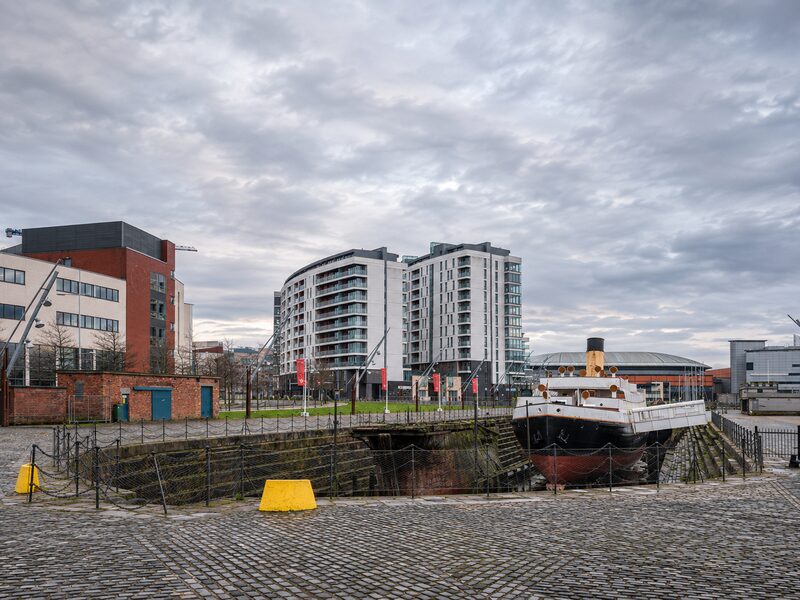
The tender that ferried first-class passengers out to Titanic at Cherbourg, now restored in her original Belfast dry dock.
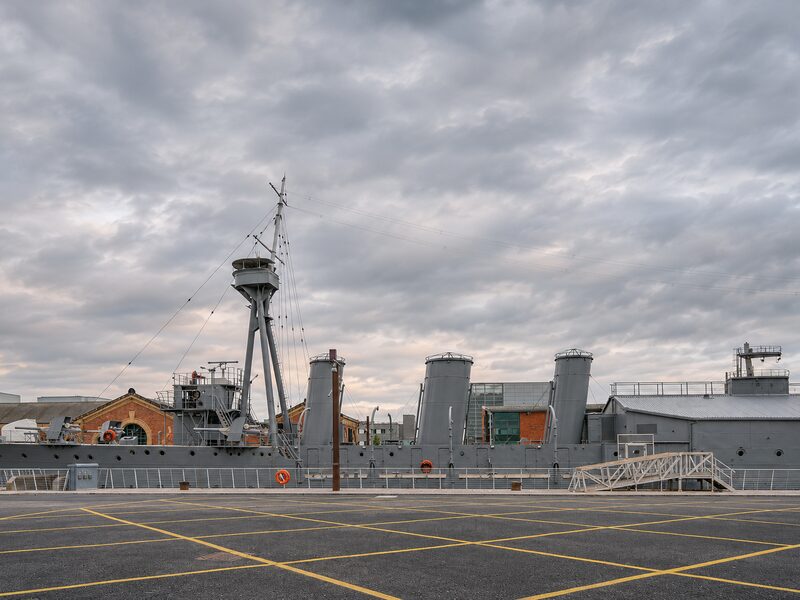
The last surviving Royal Navy ship from the Battle of Jutland, berthed in the Alexandra Dock.