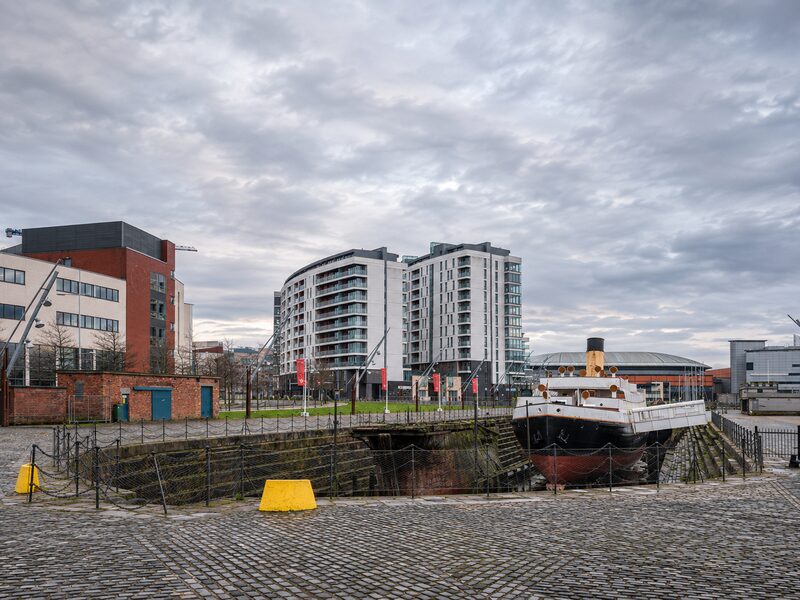
SS Nomadic
The tender that ferried first-class passengers out to Titanic at Cherbourg, now restored in her original Belfast dry dock.
Titanic Quarter
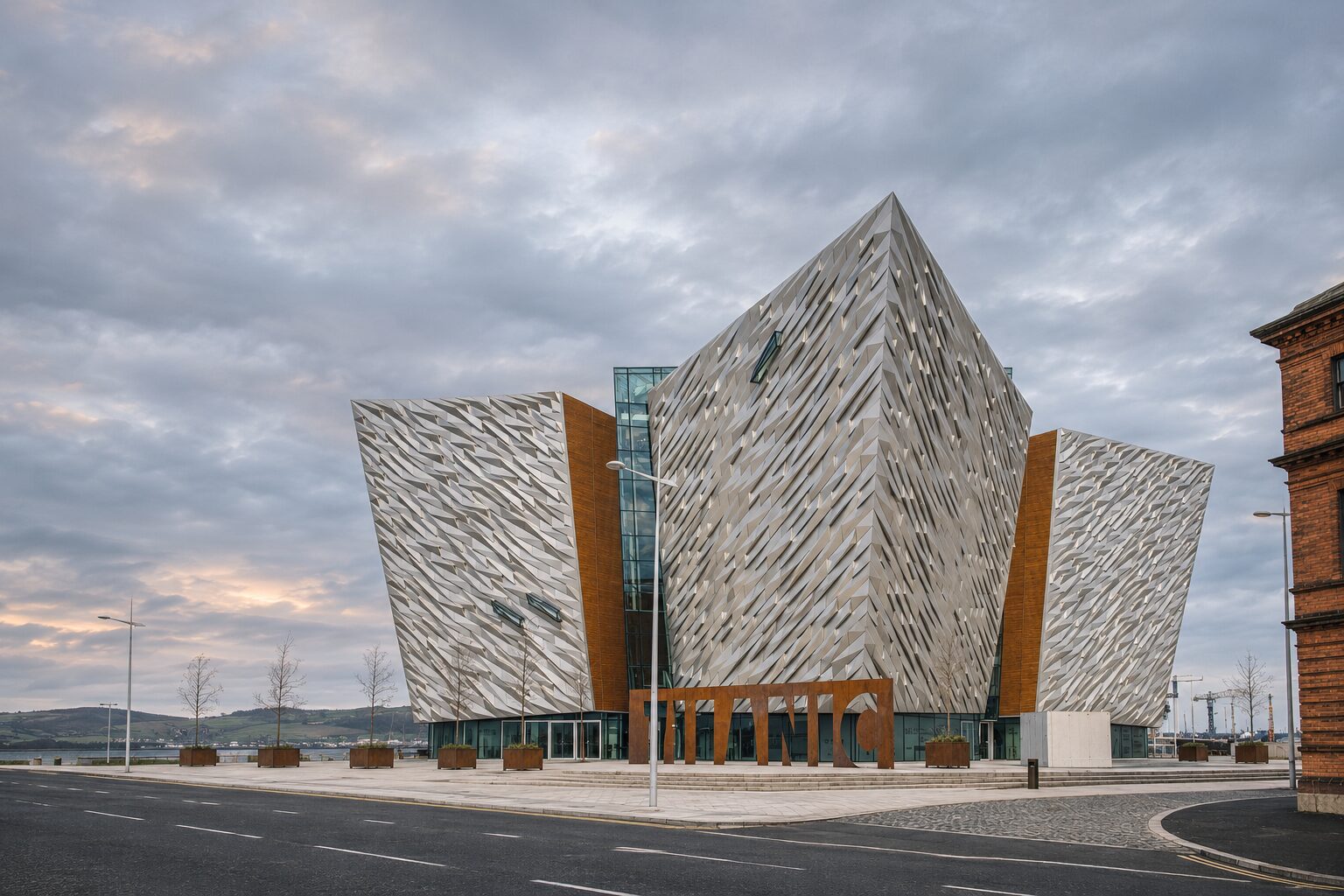
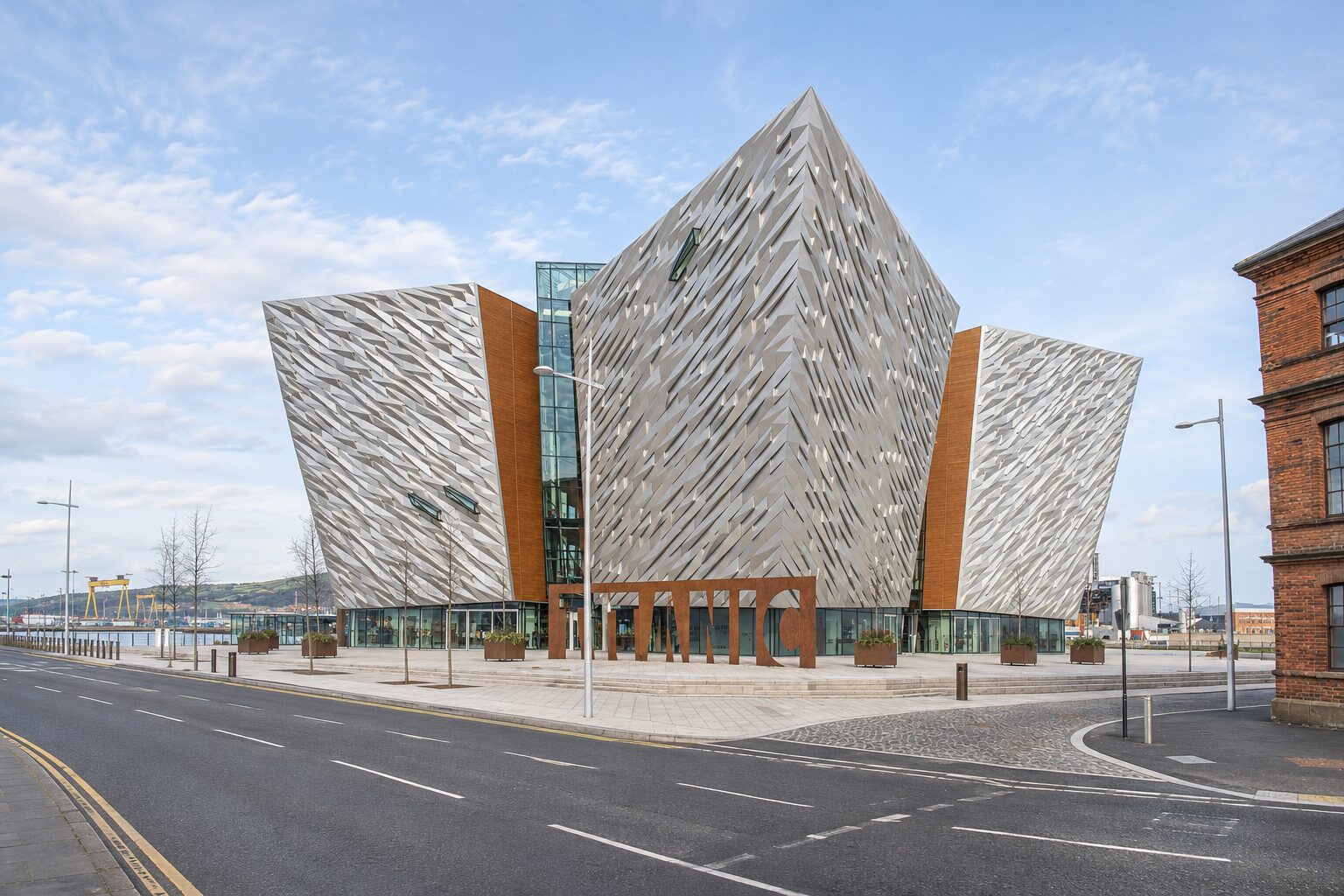
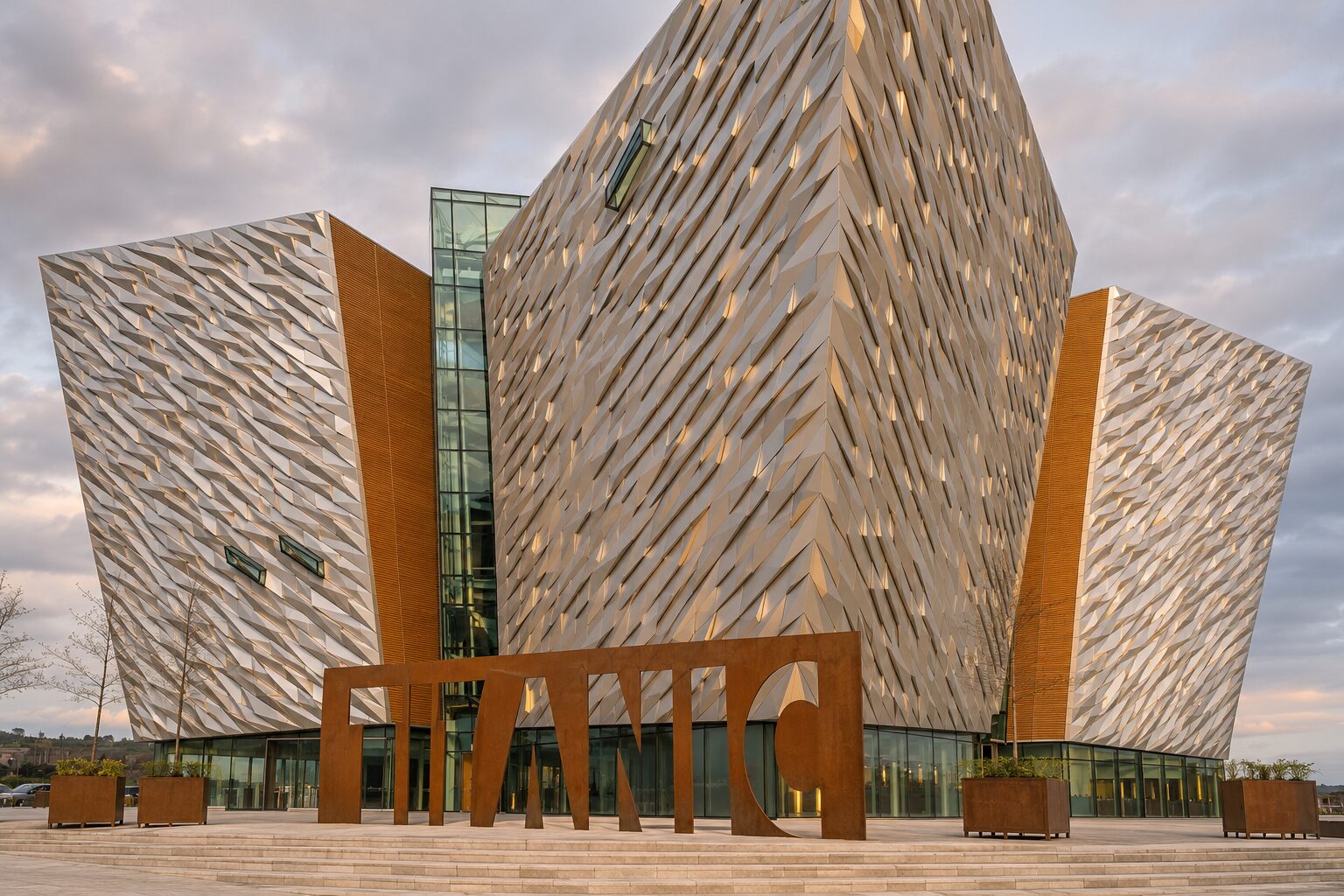
Belfast's single most recognisable building rises in aluminium peaks on the very ground where RMS Titanic was designed, built and launched. It is the anchor of the regenerated Titanic Quarter and, for most visitors, the first stop in the city.
Opened in 2012 for the centenary of the sinking, Titanic Belfast spreads nine interpretive galleries across six floors. You move from the clamour of Edwardian Belfast — a boomtown of linen, rope and ships — into a shipyard ride that recreates the heat and noise of the gantries, then through the fit-out, the launch, the maiden voyage and the disaster itself, closing with the discovery of the wreck.
The building's four hulls each rise to the height of Titanic's bow, and the façade is clad in roughly three thousand silver anodised panels that catch the changing Belfast light. Outside, the slipways where Titanic and her sister Olympic were built are marked out at full scale — a sobering way to grasp just how large these ships were.
Allow at least two to three hours. The galleries are detailed and text-rich, and the shipyard ride and the glass floor over a launch gantry are the moments most people remember.
The tender that ferried first-class passengers out to Titanic at Cherbourg, now restored in her original Belfast dry dock.
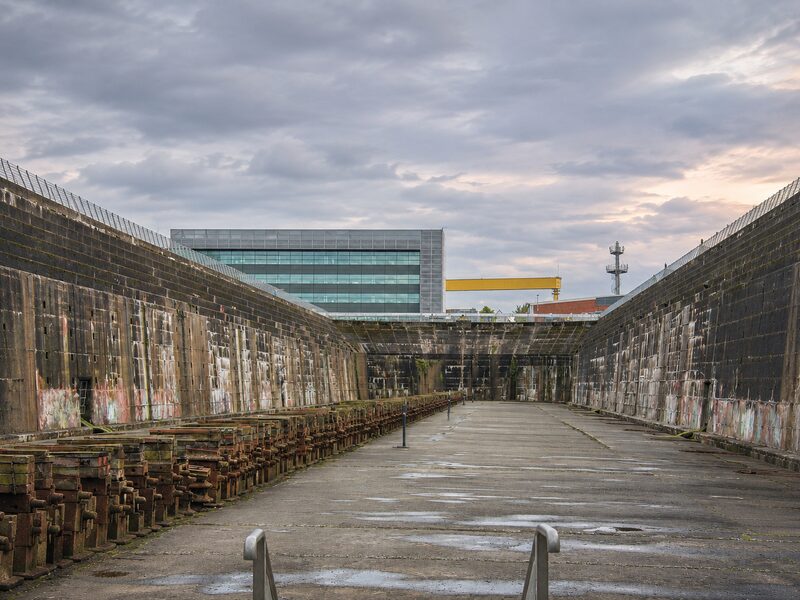
The vast graving dock built to fit the Olympic-class liners, with its original pump-house and engineering still in place.
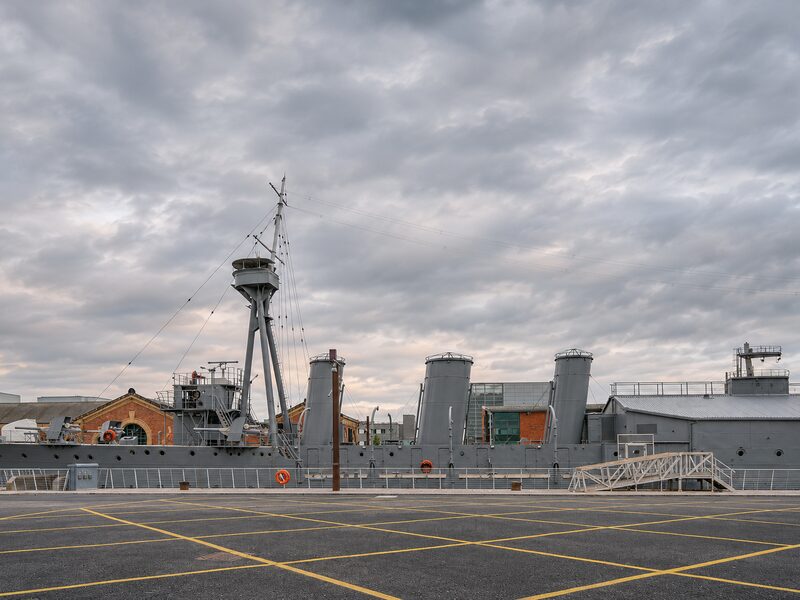
The last surviving Royal Navy ship from the Battle of Jutland, berthed in the Alexandra Dock.